- Austin Social Impact News
- Posts
- Austin’s Cap and Stitch Project Proposes 26 Acres of New Green Space
Austin’s Cap and Stitch Project Proposes 26 Acres of New Green Space
A vision to reconnect neighborhoods long divided by infrastructure

Grateful Giving
June 09, 2025 • Estimated Reading Time: 3 minutes
Austin Social Impact News is produced by Grateful Giving, a 501(c)(3) nonprofit tech startup focused on transforming every purchase into a force for good.
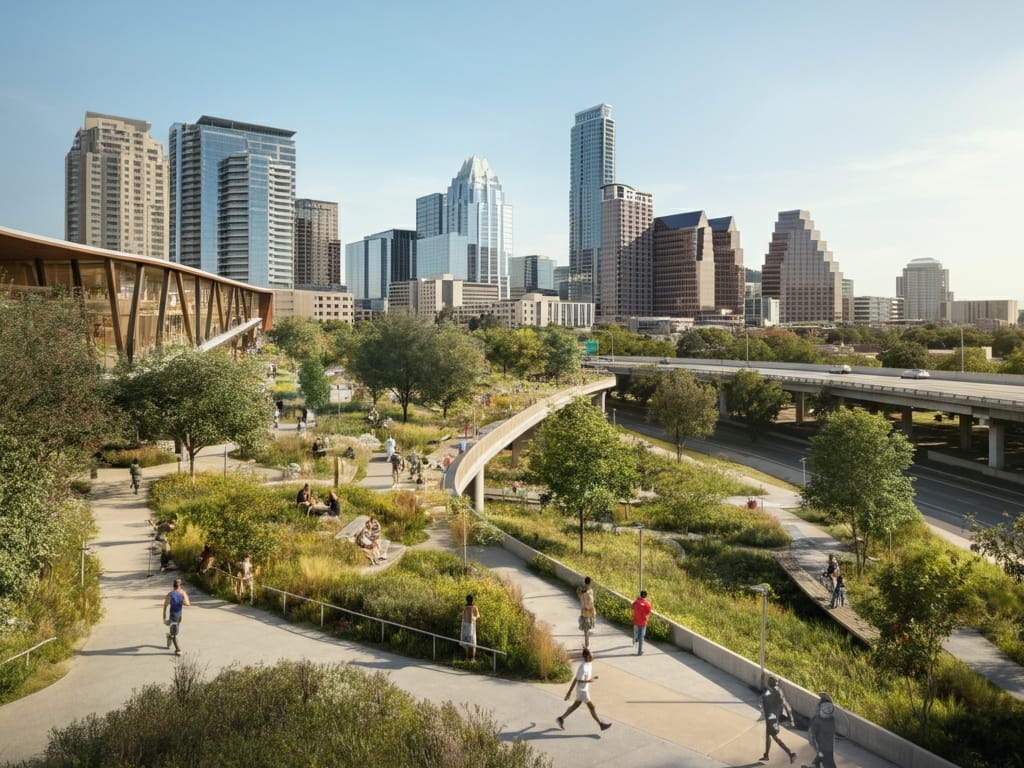
A bold new proposal from the City of Austin could reshape the central stretch of Interstate 35 and the lives of those who live near it. The city is considering a $265 million investment to build “caps” over portions of I-35 through downtown Austin, creating up to 26 acres of parkland and public space above the highway.
This plan—known as the “Cap and Stitch” project—is designed to address decades of physical and social division caused by the highway, particularly the separation of East and West Austin. By building these decks over sections of I-35, the city aims to restore walkability, increase access, and create green space in areas where connectivity has been lost.
The project is closely tied to the Texas Department of Transportation’s (TxDOT) larger I-35 Capital Express Central rebuild. That multi-billion-dollar highway redesign will lower the interstate below ground level through downtown Austin, opening the possibility of building structures over it.
According to city officials, these caps could house parks, plazas, cultural gathering spaces, or mobility hubs. While designs are still conceptual, the City of Austin has begun public outreach efforts and is exploring potential funding sources, including federal transportation grants, philanthropic support, and public-private partnerships.
A major objective of the Cap and Stitch effort is to help mitigate the displacement and disconnection experienced by historically underserved communities—especially in East Austin—since the original construction of I-35 in the mid-20th century. Restoring links across the corridor could provide long-term social, economic, and environmental benefits.
The initiative remains in its early stages, with city leaders still gathering input and finalizing plans in coordination with TxDOT’s timeline. If the vision is realized, construction of the caps would begin after the highway rebuild is complete, likely near the end of this decade.
Projects like this are ambitious, but they offer a chance to correct historic harms while building a future that prioritizes access, equity, and shared space. For many across the Austin area, this proposal invites a question worth asking: what if infrastructure could bring people together instead of pushing them apart?
To learn more or participate in the planning process, visit AustinTexas.gov.
Every Swipe, Every Purchase, Every Dollar—Making the World Better
Imagine if every transaction you made included just 1/2% for good—you could help solve world hunger in a day.
Be part of this incredible change, turning everyday spending into hope and making a difference that truly matters by setting up micro-donations in Grateful Giving at app.gratefulgiving.org.

Reader Survey: What would you like to see more of in future issues of Social Impact News? |